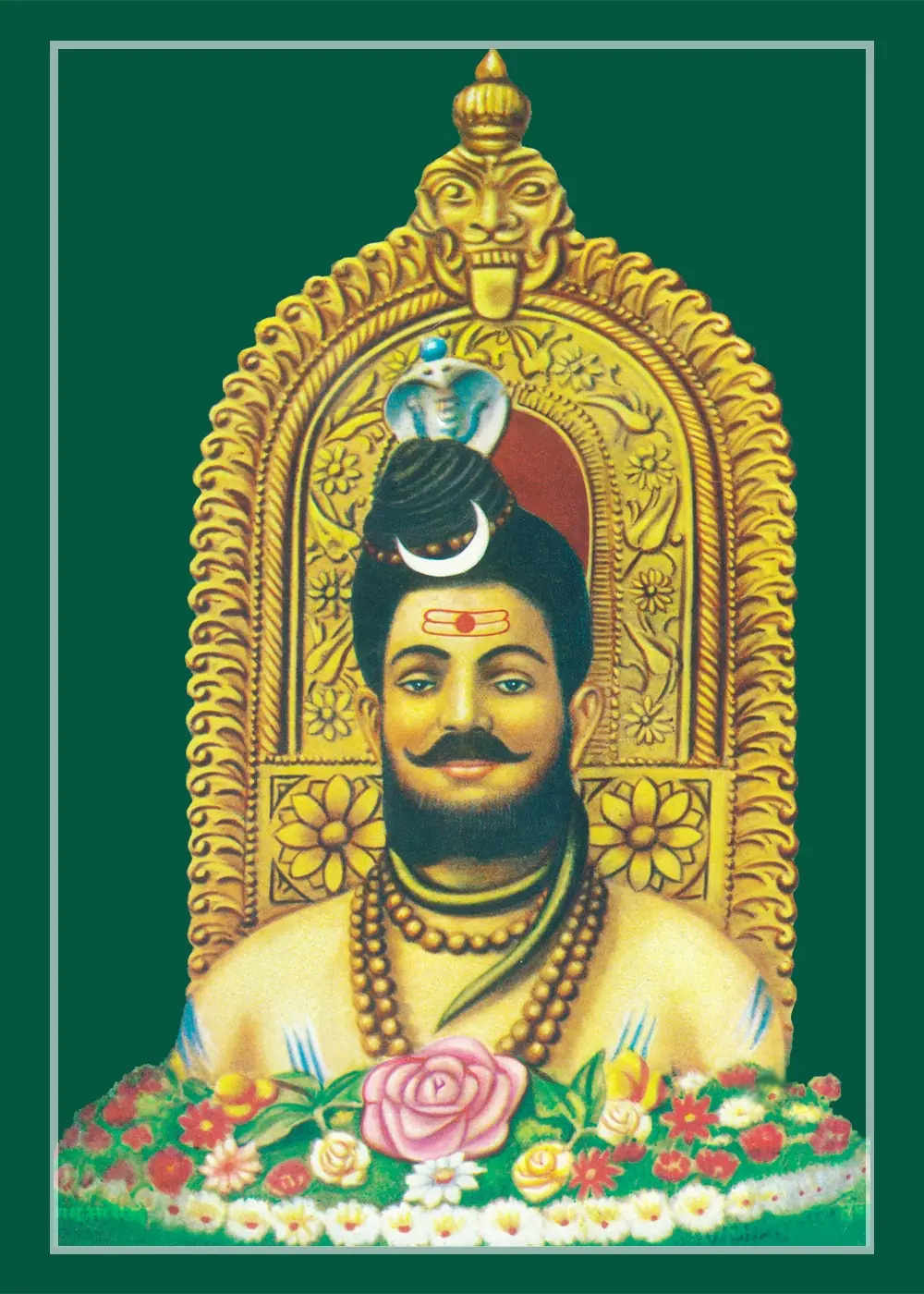
Goa is located on the western Coast of India and is the 25th State of the Union of India. Known by many names, since the past two millennia, such as Gube by Ptolemy, to Sunaparanta, Gopakapattana, Govapuri, Gomantak, etc, the present-day borders of this State were formed only around 1788 CE. History of this land can be traced to 200 BCE with many dynasties having their reign over these domains, such as the Bhojas, the Satavahanas, the Konkan Mauryas, Badami Chalukyas, South Konkan Shilaharas, Kadamb’s, the Vijayanagar Kings, Bahamani, Adilshahi Rulers of Bijapur and finally the colonial rule of the Portuguese. Goa gained freedom on 19th December 1961 through a joint action of the Indian Armed Forces, under code name ‘Operation Vijay 1961’
The Portuguese entered these lands from Kerala, via the sea route, on 25th November 1510 and captured ‘Ellapuri’ (now called as ‘Old Goa’ or ‘Velha Goa’), the western region administrative capital of the Adilshahi Dynasty. Immediately after, they captured the strategic islands of Divar and St Estevao across the River Mandovi. Incidentally Ellapuri lies on Tiswadi Island, - the largest island, inland of Goa. When the Portuguese attacked, there existed many beautiful mosques in and around Ellapuri, which were destroyed and burnt during the conquest, as Muslims were their traditional foes from the Iberian wars. However, the Hindu’s were allowed protection to practice their religion by the Portuguese Admiral Afonso de Albuquerque.
The present-day Goa, during that era, was ruled by various local rulers and chieftains. In 1543 CE, the Portuguese attacked the northern lands and captured Bardez Taluka across River Mandovi, which were administered by the Adilshah; and in the latter half of the same year, they conquered Salcete Taluka, towards the South across River Zuari. The Portuguese held only these three Talukas till 1773 CE, after which they extended their hold to other talukas, which presently denote Goa. Finally, in 1788 CE, the present-day borders of Goa were formed. Goa had 11 talukas (presently 12 with ‘Dharbandora’). The initial three (3) captured by Portuguese viz. Tiswadi, Bardez and Salcete (incl. Mormugao) are known as ‘Old Conquest’ lands and the areas conquered after 1773 CE are called ‘New Conquests’ viz. Canacona, Quepem, Sanguem, Ponda, Sattari, Bicholim and Pernem.
The extreme hostility of the Portuguese aggressive evangelization was faced in the lands of the ‘Old Conquests’, while the ‘New Conquests’ was spared of any temple destruction for reasons of decline in military powers of the Portuguese and probable threat of attacks from neighbouring Hindu and other rulers. It was for this reason that temples and shrines in Goa, existing in the Old Conquests, were relocated in the New Conquests.
Accompanying the Portuguese administrators in their ships, were the Christian missionaries and evangelists representing many “Orders” of Christianity. The primary agenda of these evangelists arriving in Goa was ‘harvesting of Souls’, through conversion of faith and encompassing the local people, practicing their ethnic culture and religions, under the wings of their religion. In their relentless pursuit of proselytization, they enforced extremely harsh methods of conversion through force, deceit and deception. Their missionary headquarters was at the College of St Paul in Old Goa. History informs that it is from here that the conceptualization of the strategy for destruction of Hindu Temples gained momentum.
This planned strategy for destroying temples was later endorsed by the Portuguese monarch, and the destructive campaign was aggressively and jealously put into action on the Island of Divar. The original name of ‘Divar Island’ was ‘Dwipa-vatika’, which was locally referred to as ‘Dev-wadi’ because of the innumerable Hindu temples and shrines existing here. The local Goans still refer to this island in local dialect as ‘Divadi Island’, which later corrupted to ‘Divar Island’. Besides primary temples of major deities, there were many ‘Gram-Devta’ (village deity) and ‘Kul-Devta’ (Clan Deity) shrines on this island.
The region of old era Goa from before the first millennia was eyed by many dynasties and rulers, as listed above, due to its natural ports, international trade and military importance, besides its rich agrarian produce. These were the primary reasons that its reigns and rulers changed hands through brutal battles and takeovers by invaders of various faiths. Invariably, such skirmishes led to destruction of local culture through collateral damage or planned destruction.
The Sri Saptakotishwar Temple became a victim of the aggression by Malik Kafur, in 1352 CE, when he led the forces of Bahamani Sultan Hasan Gangu, who had a Turkish descendancy, the Ruler of Delhi against the Kadamb Kings and defeated them. Having heard of immense wealth found under the ‘jyotirlinga’ in the temple of Sri Somnath, during the plundering raids of Mahmud Ghazni and later by Ulugh Khan of the Khilji’s, Malik Kafur ordered that this ling be uprooted from the sanctum sanctorum. Having found nothing, it was later damaged and discarded outside the temple.
But in 1541 CE, the excessive aggression by Christian missionaries led to its destruction. The religious icon, the “Ling” was deliberately removed by these missionaries and buried under a public walking path of a nearby ‘bandh’ (traditional raised mud pathway in fields), for people to deliberately walk over and defile it. It is said that the original religious icon, the “Ling”, was made of ‘Panch-dhatu’ or an alloy of five metals - gold, silver, copper, iron and bronze.
It was from this year, 1541 CE, that the missionaries carried out massive conversion in the lands under their control. However, the strong faith of the Hindu devotees became a hindrance in the missionaries achieving their targets. This led to the Portuguese banning icon worship in 1546 CE, carry out forced conversions and temple destruction, spreading like wildfire across their jurisdiction.
It is said that on 15th August 1560, the very year of establishing the dreaded ‘Court of Inquisition’, 1505 brahmins from Divar Island were forcefully converted when they came to pay obeisance. Probably, he was referring to the Sri Saptakotishwar Temple devotees taking the Holy dip on Mahashivratri or Gokulashtami day, in the lake or at the riverbank.
At the end of the 17th century, one Fr. Francisco de Sousa, in his publication “Oriente Conquistado” writes: ‘One temple in Divar Island is considered as Holy by the Brahmins as “Jerusalem” is for Christians and their devotees take a sacred bath, once every year, in this Tirth there.’
Keeping both the facts above, it may be construed that the evangelists thought that they could create another “Jerusalem”. Also, on this day, a Jesuit Priest Joao Nunes Barreto destroyed the Sri Saptakotishwar Temple, or whatever was left of it. Later, near this spot, they constructed the Our Lady of Candelaria Chapel.
Traces of the remnant of the huge, black schist granite stones of the original temple at Naroa can still be visible at its original site atop the hillock. A broad pathway still exists, demarcated by laterite rock traditional compound walls on either side, which leads from in front of the Candelaria Chapel to the other side of the hillock to an aesthetically rock cut lake.
A huge masonry Cross, with a shed cover, has been built on the pathway atop the hillock and a beautiful Chapel dedicated to Our Lady of Candelaria has been constructed in 1563 CE at the base of the hillock. The architecture of this Chapel is unique and fascinating!
The sanctity and importance of the Sri Saptakotishwar Temple at Naroa Divar can be gauged by the written records of Padre Pedro Almeida, Padre Luis Froip and others in the 16th century. As per the Portuguese records, the temple lake in front of the temple was called “Koti-Teerth”.
Actually, there are two lakes, one on the East and the other one in the North side of the hillock, on which the Sri Saptakotishwar Temple existed.
There exists a beautiful laterite rock carved, temple lake having ‘Shikhara’ design carved niches for oil lamps all around its internal sides, with broad laterite cut steps reaching to its lower level, on two sides, towards the East of this mount. This lake has been brought under the protection of the Directorate of Archaeology, Government of Goa and beautifully maintained.
A much bigger lake (almost four football grounds), towards the North side, is now converted to crop fields. Visitors can see huge, rock cut steps towards its South-west side corner, used by the devotees then.
While the Rock Cut Lake, with niches towards the East, was used for temple rituals, the larger lake towards the North was used by the thousands of devotees, who visited this temple daily, for their ritual bathing purposes.
It is said that after a few days, some devotees who felt pained at this act of people walking over it on the bandh, clandestinely removed it under cover of darkness, shifted it and buried it far away near a well, - a location near the present Malar - Narve ferry jetty. Incidentally, the river width is the narrowest at this point.
Once the ‘Ling’ was retracted from the bandh and buried near the well at Malar, secrecy was maintained and the matter forgotten, as there was a big threat to any person found revering such icons. They would be severely penalized and even incarcerated by the Portuguese.
At the point where the ‘Ling’ was hidden, the River Mandovi was at its narrowest in width from across enemy territory of Bhatagram. The Portuguese had erected a small fort, called ‘Fort of Naroa’ with minimal but armed soldiers manning it, to guard and observe enemy movements.
During these evangelical incidents on Divar Island, the lands across River Mandovi in Bhatagram or Bicholim taluka, were administered by the “Sardesai” Narainrao Shenvi Suriarao, who was a ‘Mandlik” (administrator) of the Adilshah.
Local legend informs us that Narainrao began getting a repeated and disturbing dream, where a bearded person, having a divine personality and wearing ‘rudraksh’ necklace, appealing to be ‘removed and shifted from his present location’.
Having given it a thought, Narainrao, and his brother, gathered a group of 10-15 strong men and on a pitch-dark night silently crossed over to Malar Ward of Divar Island in traditional canoes.
When returning, the Portuguese soldiers stationed at the Naroa Fort heard suspicious sounds and fired their rifle shots in the dark. Unfortunately, it is said that the brother of Narainrao was mortally wounded and later succumbed to the bullet wounds.
On safely shifting the sacred icon across the river in 1547 CE, they whisked it away to the village of Latambarcem, near Dodamarg, where it remained for two years i.e., till 1549 CE.
After being venerated in Latambarcem for about two years, Narainrao decided to bring the “Ling” closer to its original locale of Divar Island, but on the northside bank of the ‘Panchaganga’ – a riverbank under his jurisdiction.
Here, at this Holy Riverbank Point, as per local belief, five river waters meet (Rivers Mhadei, Mandovi, Zuari (Aghanashini), Valvanti & Khandepar), in the village of “Hindale” of Bhatagram (Bicholim).
The ward of the Hindale village, where this “Ling” was established in a laterite cut cave was now referred to as “Nave’ Narve” (New Naroa), ‘Konkan Narve’ or just ‘Narve’ after the original location of “Naroa” ward on Divar Island.
In Hindale Village, there existed a laterite hillock, which was carved out as a cave and the ‘Ling’ consecrated here. Narainrao Suriarao - the Sardesai of Bhatagram, besides bearing the cost of constructing this shrine temple, also donated lands to the temple.
The Holy icon comprises of the “Pindika” (base) and the ‘Ling’ (the phallic icon). The base is made of a carved black schist stone, which is round and having a “Pindika” with a carved elongated spout to collect and direct the Holy water outward.
Though round, it portrays a square top, due to four ‘Fleur de Lis’ pattern at upper four ends. The base is in dimensions approximately two feet by one and half foot (2ft x 1.5ft). The height of the “Pindika” is about 2 ft from the floor.
The Sacred phallic icon - The ‘Ling’ is affixed in the central part of this ‘Pindika’. It is round and about 6-7 inches in height. Presently a silver alloy cap is cast over the original Ling as it has furrowed due to continuous ‘Abhishek’.
Records as written by shri Xambarao Suriarao Sardesai inform us that in the year 1569 CE, Narainrao took it upon himself to construct a small shrine for this deity.
However, after completion of the Chowk, Ghumat and the Sondye’ area (front mandap), and when the work was incomplete, Narainrao passed away.
In 1596 CE, records inform us that the heir of Narainrao ‘Sardesai Deski’, Ramajirao carried out repair works of this temple.
1148-1179 CE: The original temple of Sri Saptakotishwar was in Naroa ward of Dwipavatika or Divar Island built by Kadamb Queen Kamaladevi.
1549 CE: The original temple shrine at Hindale Village later renamed as Narve, was constructed by Narainrao Suriarao.
1668 CE: Chhatrapati Shivaji Maharaj ordered construction of the present temple edifice.
1909 CE: Major repairs to the mandaps and tiled roof were carried out.
2000 CE and 2018–2023 CE: Major renovations carried out under the Directorate of Archaeology, Government of Goa.
Every Monday and Ekadashi are prime ritual days when the Palkhi of Sri Saptakotishwar proceeds in procession around the temple precinct.
Major festivals include Mahashivratri, Kartik Utsav, Dussera, Vaikunth Chaturdashi, Ratha-Saptami, and Holi, conducted with traditional rituals, Palkhis and Rath processions.